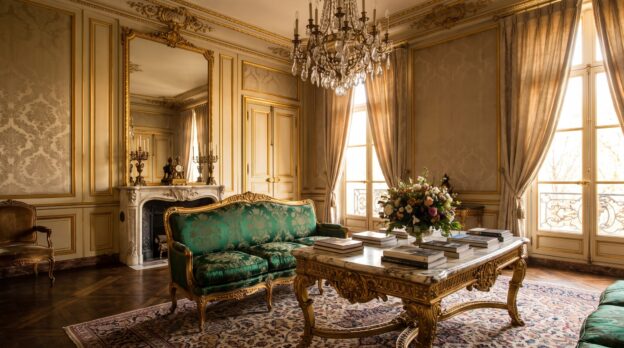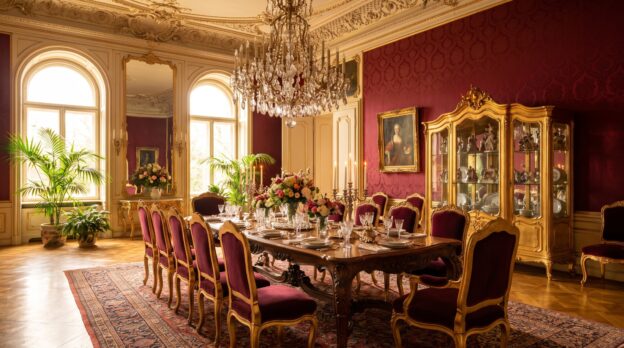
When the doors open and the gaze falls upon a long table above which a chandelier of cut crystal hovers, the evening begins not with a meal but with an entrance. A baroque-style dining room transforms every invitation into a performance, where the furniture does not merely fulfil a function but creates atmosphere. Here, restraint does not count, but rather the deliberate gesture: gilded carvings, heavy silk at the windows, mirrors that multiply the candlelight.
The room itself becomes a stage as soon as one enters it. The Baroque thrives on the idea that architecture and furnishings together produce an effect that transcends the everyday. Those who plan such a dining room choose a form of hospitality that demonstrates generosity whilst simultaneously demanding structure. Every element must know its place so that the overall picture does not appear overloaded but rather sublime.
The Table as Centre: Proportion and Material
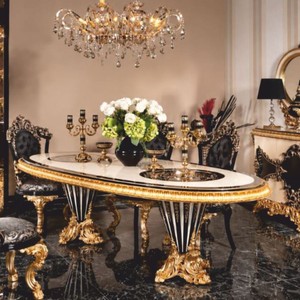
At the centre stands the dining table, and it must show scale. Baroque Dining Tables are long, often rectangular, sometimes oval, and their top rests on artfully turned or carved legs. Walnut, mahogany or oak in dark tones form the base, whilst inlays of lighter wood or gilded fittings provide accents. The surface should be polished to a high gloss so that it reflects light and optically expands the room. A table for ten to fourteen persons is not an exaggeration but the correct dimension for a room designed for formal evenings. Casa Padrino offers models that combine this impact with artisanal precision whilst never appearing clumsy.
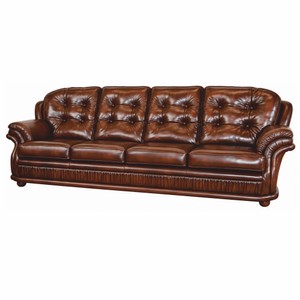
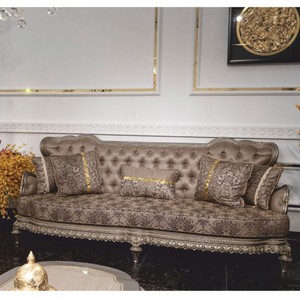
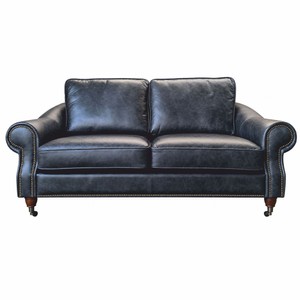
From the Casa Padrino collection
Chairs with Bearing: Upholstery and Carving
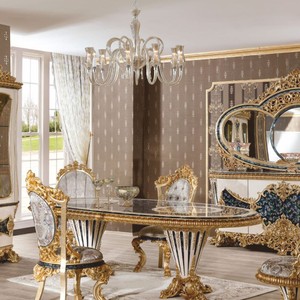
The Chairs must match the table, not only in height but also in presence. High-backed models with carved backrests displaying volutes, acanthus leaves or coats of arms give every guest a dignified posture. The upholstery in velvet or heavy jacquard should be in bordeaux, emerald green or gold ochre, colours that create depth whilst radiating warmth. Armrests are optional, but if present, then please with gilded terminals. The legs of the chairs echo the formal language of the table: curved, turned, with subtle carvings that stand out in candlelight.
Light as Direction: Chandeliers and Wall Sconces
The light determines the mood, and in the Baroque that means: multiple levels that complement each other. A large chandelier of crystal or brass hangs centrally above the table, low enough to show presence, high enough not to obstruct the view. The arms carry candles or candle-shaped light sources that produce warm, flickering light. On the walls, wall sconces with curved arms and cut glass elements flank the room and ensure that the periphery does not disappear into shadow. Casa Padrino carries lighting that references historical models without appearing museum-like and that integrates seamlessly into modern electrics.
Display Cabinets and Commodes: Presentation with System
A baroque dining room requires furniture that displays treasures without being obtrusive. Tall Display Cabinets with glazed doors present porcelain, crystal glasses or silver cutlery whilst simultaneously staging them. The frames are of solid wood, often with gilded carvings, the interiors lined with velvet or silk. A commode or sideboard on the long wall offers storage space for tablecloths and napkins, whilst the surface leaves room for a bowl, a candlestick or a vase. The furniture should have a uniform colour scheme so that the room does not become restless, but in the details they may vary.
Walls and Fabrics: Texture and Colour
The walls support the room. Silk wallpapers in cream, champagne or delicate rose create an elegant foundation, whilst stucco mouldings and decorative profiles emphasise the architecture. Alternatively, a matte paint finish in grey or taupe also works, provided it is enlivened with gilded frames and mirrors. Heavy curtains of velvet or brocade in dark tones frame the windows and can be drawn when required to create an intimate atmosphere. A large mirror on the end wall optically doubles the length of the table and reflects the light of the chandeliers. Casa Padrino also offers textile accessories that complete this staging without diluting the line.
Details That Make the Difference
A baroque dining room thrives on the small gestures that round off the overall picture. Here are some rules that have proven effective:
- Distribute candlesticks of silver or gilded metal on the table, never in a straight line but slightly staggered.
- Use porcelain with gold rim or fine painting that matches the colour scheme of the chairs.
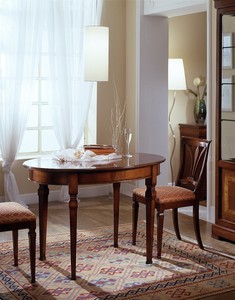
- Place a rug under the table that is large enough so that even the pushed-back chairs stand on it. Oriental patterns or floral borders work well.
- Arrange fresh flowers in a tall vase, but not so abundantly that they obstruct the view across the table.
- Pay attention to symmetry: what stands on the left requires a counterpart on the right.
The Room as Total Work of Art
A baroque-style dining room is not a place for quick meals but a space that demands time and gives time. The furniture, the light, the fabrics and the details combine to form a staging that carries the evening and gives every guest the feeling of being part of something special. Those who implement this style consistently create a place where hospitality becomes art and every table becomes a stage.
Related categories: Garden Decoration, Garden Furniture, Baroque and Art Nouveau Garden Furniture. The full range: Baroque Furniture.