
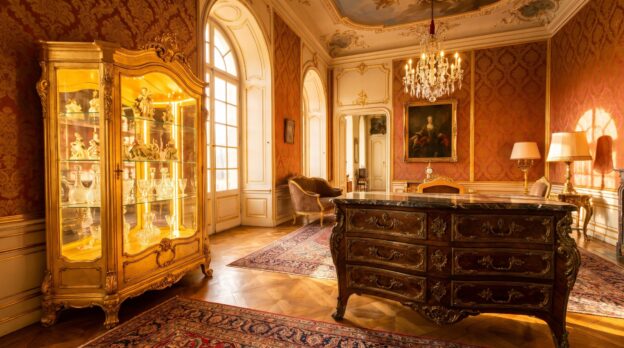
A display cabinet is far more than a piece of furniture with glass doors. It is both stage and frame, a place where Meissen porcelain stands beside Bohemian crystal and every vase, every bowl tells its own story. Light falls through the panes, refracts in cut edges, casts soft shadows on velvet-lined back panels. Anyone who owns a collection knows: the right presentation determines whether objects stand mute on the shelf or invite dialogue.
But how does one ensure that a display cabinet does not appear overloaded, that it creates order without becoming sterile? It begins with the choice of the furniture itself, continues with the arrangement of the pieces, and ends in details such as lighting and background. Those who master these elements transform a collection into an ensemble that defines the room and attracts attention without being intrusive.
The Right Furniture: Form Follows Function and Style
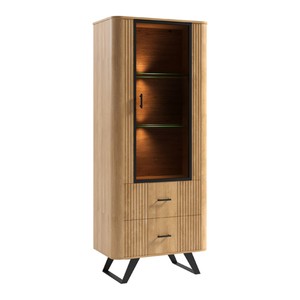
The choice of display cabinet depends on two factors: the character of the collection and the architecture of the room. Tall, narrow Display Cabinets are suitable for rooms with limited floor space but generous ceiling height. They direct the gaze upward, create verticality. Wide, low models, on the other hand, emphasize the horizontal, suit modern floor plans with open living areas. The material plays an equally important role: mahogany and walnut radiate warmth, suit classical interiors with stucco and parquet. Lacquered surfaces in black or white rely on contrast, make the objects behind them stand out more sharply.
The framing through glass is also decisive. Faceted cuts and leaded glazing distract from the exhibits, are more suitable for historical furniture that itself becomes a work of art. Clear glass recedes, lets the collection speak. For valuable pieces, anti-reflective glass is recommended, which minimizes light reflections and allows the gaze to penetrate unobstructed into the depth.
From the Casa Padrino collection
Grouping and Rhythm: The Order of Things
A successful display cabinet follows an inner rhythm. Objects are not distributed randomly but organized in groups connected by form, color, or origin. Three vases of different heights form a unit, a pair of goblets frames a central bowl. Odd numbers create tension, even numbers symmetry. Both have their justification, depending on whether the room is designed for calm or dynamism.
Height differences create depth. Small pedestals made of acrylic or wood elevate individual pieces without disturbing the view. Flat objects such as plates or medals lean against the back wall, tall vessels stand at the front. This creates a staggered arrangement that prevents forms from overlapping. Space remains between the groups, room to breathe. An overloaded display cabinet tires the eye, one too empty appears lost.
Color and Material: Harmony Through Restraint
The back panel of a display cabinet is not a neutral background but an active part of the staging. Velvet in dark blue or burgundy makes gold and silver shine, emphasizes warm tones. Light linen or silk creates distance, cools down, suits modern ceramics or Scandinavian porcelain. Those who wish to forgo color choose mirrors: they double the collection, create depth, but require precise arrangement, as every object becomes visible from two sides.
The Decorations within the display cabinet also follows clear rules. Less is more. A single eucalyptus branch, a dried hydrangea, a narrow silk ribbon suffice to set accents. Seasonal elements bring variety without dominating the collection. In autumn a branch with rose hips, in winter a silver cone. Everything added must subordinate itself.
Lighting: Light as Silent Director
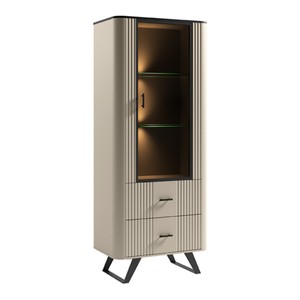
Without light, a display cabinet remains mute. Daylight alone is rarely sufficient, as it moves, casts shadows, fades under cloudy skies. Integrated LED strips at the top edge or on the sides provide even illumination. Warm white light emphasizes red tones and gold, cool white light makes crystal and silver appear clearer. Dimmable systems allow the intensity to be adjusted to the time of day.
Spotlights stage individual objects, create drama. They are suitable for special pieces that stand out from the collection: an antique vase, a signed glass, a rare figurine. But caution: too many light sources create restlessness, make the display cabinet look like a sales counter. Two to three targeted accents suffice.
Rules for Arrangement: Concrete Principles
- Heavy objects at the bottom, light ones at the top: crystal bowls and bronze figures belong in the lower compartments, delicate porcelain and glasses at the top.
- Color gradients create harmony: arrange objects from light to dark or in gradations of a color family, for example from cream through beige to brown.
- Symmetry for classical rooms, asymmetry for modern ones: in a period building with double doors, a centrally aligned display cabinet appears harmonious; in a loft, the arrangement may be freer.
- Plan for empty surfaces: every shelf needs space without objects, at least one third should remain free.
- Rotation instead of stagnation: exchange individual pieces every few months, bring objects from storage to the front, let others rest.
The Display Cabinet in the Room: Location and Environment
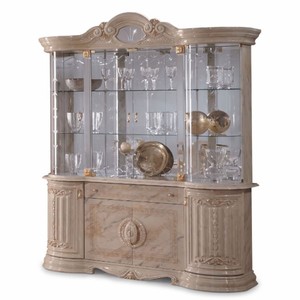
A display cabinet does not stand in isolation. It enters into dialogue with the furniture around it, with the wall color, with pictures and textiles. In a dining room it forms the counterweight to the table, in a living room the calm pole opposite the seating area. The distance from the wall should be sufficient to clean the back, but not so large that the furniture appears lost. Fifteen to twenty centimeters suffice.
Those who own several display cabinets do not place them side by side but distribute them in the room or in different rooms. This creates not a museum-like impression but a natural presence. The proximity to other furniture also requires consideration: Commodes with closed fronts form a calm contrast to the transparent surfaces of a display cabinet, create balance between concealing and showing.
Care and Presence: Keeping the Collection Alive
A display cabinet demands attention. Dust settles on glass and porcelain, fingerprints cloud the panes. Regular cleaning is part of it, preferably with microfiber cloths and mild cleaners. Sensitive surfaces such as gilded edges or mother-of-pearl require special agents that protect the material.
But care means more than cleaning. It is about knowing the collection, preserving its stories, consciously integrating new pieces. Those who fill a display cabinet curate. They decide what becomes visible and what remains hidden, create order and meaning. Casa Padrino understands this interplay of furniture and content, offers display cabinets that not only function but lend dignity to the objects within.
What Defines a Display Cabinet: Order, Light, and Respect
In the end, it is the clarity that sustains a display cabinet. Not the quantity of objects decides, but the care of their arrangement. Every piece needs space, every ensemble a rhythm, every group a theme. Light directs the gaze, color creates atmosphere, emptiness gives things weight. Those who observe these principles transform a collection into an image that inscribes itself into the room and remains.
Related categories: Sofas, Mirrors, Garden Fountains. The full range: Baroque Furniture.