
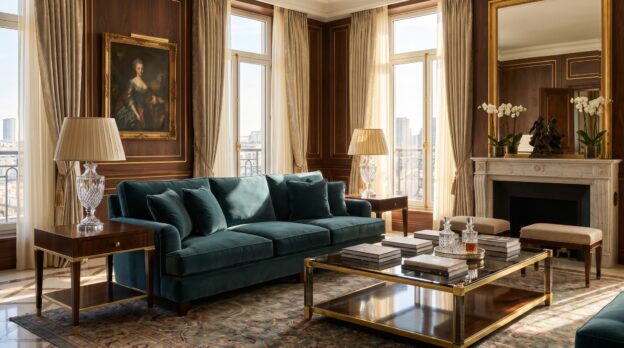
In the lounges of grand city hotels, an atmosphere prevails that has nothing to do with opulence and everything to do with precision. The armchairs are not placed randomly, the tabletops have a matte sheen, the proportions are so clear that you do not notice them. Here, luxury works through restraint: materials of substance, forms without excitement, colours that calm the space rather than animate it. Those who bring this style home create not a backdrop, but a place where one arrives.
The grand hotel style without embellishment follows a simple rule: fewer elements, but each with substance. No ornaments, no contrasts for their own sake. Instead, an order that runs through the entire room and that you feel before you analyse it. Casa Padrino shows how this approach works in living spaces without becoming sterile.
Materials with Substance and Matte Surfaces
Quiet luxury begins with surfaces. High gloss has no place here, but marble with a honed, not polished finish does, as does oak with open grain, leather that takes on patina. These materials carry the room because they have substance and do not demand attention. A coffee table made of solid walnut with a matte seal sets an accent through its weight, not through shine. Brass in a brushed finish on table legs or handles fits in without dominating.
The tactile quality is important: everything you touch should feel like material, not like coating. Natural stone, solid wood, full-grain leather, heavy velvet. Casa Padrino works with these surfaces because they endure and become more beautiful over time, rather than ageing.
From the Casa Padrino collection
Proportions That Carry the Space
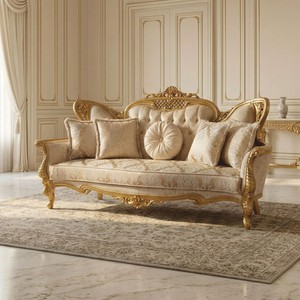
In the grand hotel style, individual pieces do not determine the space, but rather the relationship between them. A sofa may be substantial if the room is high enough and the side tables remain low. Armchairs do not stand in symmetrical pairs, but in a way that opens sight lines. The distances between the furniture are generous, but not empty: the space breathes without falling apart.
The height of the furniture is decisive. Low seating stretches the space, high backrests provide support. A coffee table should not be higher than the seat, a side table may exceed the armrest by a few centimetres. These rules sound technical, but they create the calm that defines the style.
Colour Palette of Grey, Beige and Dark Wood
The colour scheme follows nature, not fashion. Warm grey as the base tone, beige in all shades from sand to taupe, dark walnut or oak for contrast. In addition, accents in muted blue, olive green or rust brown, but never more than two accent colours per room. White is rarely used, instead cream or light linen.
This palette makes the room appear larger because it sets no hard cuts. The transitions between wall, floor and furniture remain fluid. Casa Padrino combines these tones so that they layer without blurring: a light grey rug, a beige sofa, an armchair in dark velvet, a wooden table with visible grain.
Furniture with Clear Lines and Without Ornament
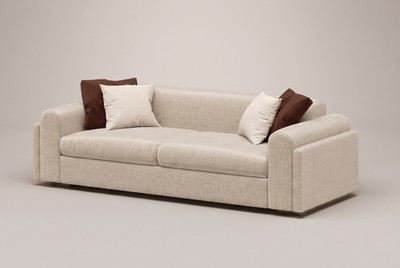
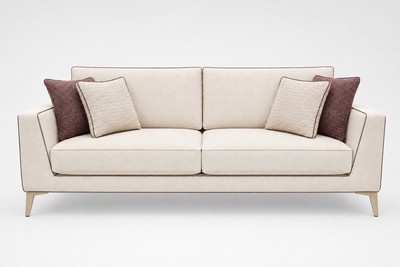
Every piece of furniture in the grand hotel style has a function and a form that follows this function. No curved legs, no carvings, no buttoning that is not structural. A sofa shows its structure: straight armrests, clear seam, feet made of metal or wood that remain visible. The Sofas carry the room through their presence, not through decoration.
Armchairs follow the same logic: a seat, a backrest, armrests that support the body. The form may be elegant, but it must remain logical. Tables reduce themselves to top and frame, whereby the frame does not hide the top, but carries it. This clarity makes the room legible.
Lighting That Creates Zones Rather Than Brightness
In quiet luxury, there is no central ceiling light that illuminates everything. Instead, several light sources at different heights: floor lamps next to armchairs, table lamps on sideboards, indirect lighting behind wall panels. The light is warm, between 2700 and 3000 Kelvin, and it never glares directly.
It is important that each light source defines an area: a reading corner, a seating group, a passage. The Side Tables next to armchairs often carry lamps with fabric shades that direct the light downwards and divide the room into layers. This zoning makes large rooms comfortable without reducing their size.
Combination Rules for Quiet Luxury
Those who implement the grand hotel style follow few but firm rules. They ensure that the room does not appear arbitrary, but composed:
- Maximum three materials per room: for example wood, leather and marble. More dilutes the effect.
- All wood tones in the same colour range: either warm (walnut, teak) or cool (oak, ash), never mixed.
- Textiles in one weight class: either linen and cotton or velvet and wool, no light fabrics next to heavy ones.
- Symmetry only in the overall layout, never in detail: two armchairs need not be identical, but they should appear equally substantial.
- Metal accents uniform: either brass, bronze or stainless steel, not mixed.
These rules sound strict, but they create freedom. Within the framework, you can vary without the room falling apart. Casa Padrino implements these principles consistently and shows that discipline does not mean coldness.
Accessories That Function Rather Than Decorate
In the grand hotel style, there is no decoration for decoration’s sake. What stands in the room has a purpose: a vase for fresh branches, a bowl for keys, a tray on the coffee table for glasses. The objects are made of the same materials as the furniture: ceramics in matte grey, marble, dark wood, metal.
Books stand upright on shelves or lie stacked on the Coffee Tables, never decoratively draped. Plants are large and architectural: Monstera, Ficus, Strelitzia, in simple planters made of terracotta or concrete. No cut flowers in colourful bouquets, but individual branches in tall vases. This restraint gives each object space without filling the room.
Rugs That Define Areas
A rug in quiet luxury is not an eye-catcher, but an anchor. It lies under the seating group and connects the furniture without framing it. The colour remains within the spectrum of the room palette: grey, beige, light brown. The texture may be visible, a light pile or a flat-woven pattern, but nothing ornamental.
Size is important: the rug should be large enough that all front legs of the seating furniture stand on it. Rugs that are too small cut up the room. Those that are too large leave no floor surface to breathe. Casa Padrino shows that a well-chosen rug underlines the architecture of the room rather than overlaying it.
What Carries the Space
The grand hotel style without embellishment lives from discipline and substance. It dispenses with everything that distracts and concentrates on what remains: material, proportion, colour. Those who implement this style create not a staging, but a space that functions without explaining itself. The furniture stands where it belongs, the materials support each other, the colours create calm. This is luxury that does not become loud.
Related categories: Commodes, Consoles, Columns and Pedestals. The full range: Baroque Furniture.