
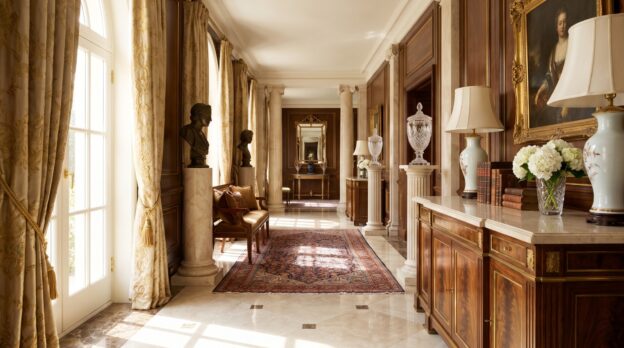
A tall room without structure often feels empty, even when furnished. Proportions blur, visual guidance is absent. Only when vertical elements structure the space does clarity emerge: columns set rhythm, pedestals elevate what should carry weight. What served a load-bearing function in classical architecture becomes a design instrument in contemporary interiors.
Working with such elements creates hierarchies. A pedestal beneath a bust or object defines a zone of attention. A freestanding column divides an open floor plan without closing it off. The interplay of height, material and placement determines whether a room can be read or remains diffuse.
Verticals as Ordering Principle
Columns structure rooms by establishing axes. In a loft with six-metre ceiling height, a single column of marble or cast iron marks the transition between living and dining areas without erecting a wall. Material determines effect: light Carrara reflects light and opens, dark granite or patinated metal densifies. The column becomes a vertical line that guides the eye upward and stretches the space. Casa Padrino offers Columns and Pedestals in various styles suitable for such spatial interventions.
From the Casa Padrino collection
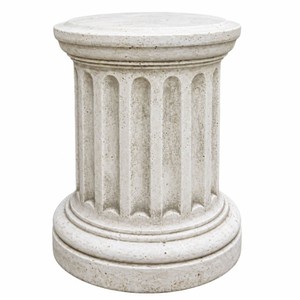
Pedestals as Stage for Objects
A pedestal lifts an object out of the spatial plane. An antique vase, contemporary ceramic or small bronze figure gains presence when standing on a defined platform. Pedestal height determines viewing level: a low pedestal of thirty centimetres integrates the object into the furniture plane, a tall one of ninety centimetres makes it a focal point upon entering the room. Material should serve the object, not compete. Plain white marble suits a coloured glass sculpture, whilst a reduced sculpture may take a pedestal of dark wood or stone with pronounced grain.
Material Choice and Proportion
A column’s effect depends on its diameter and surface. A slender column of twenty centimetres diameter appears elegant, almost graphic. A massive column of forty centimetres brings substance to the room but also demands corresponding ceiling height. For surfaces: polished marble reflects and cools, ground natural stone remains warm, brushed metal adds an industrial note. In a room with stucco and parquet, a classical fluted column harmonises; in a purist setting, a smooth stele of concrete or granite.
- Light materials such as Carrara or travertine for light-flooded rooms with high ceilings
- Dark stones such as Nero Marquina or basalt for contrasting accents in neutral interiors
- Cast iron or bronze for historic rooms with stucco and panelled doors
- Concrete or terrazzo for modern floor plans with exposed concrete and large window fronts
Placement and Spatial Effect
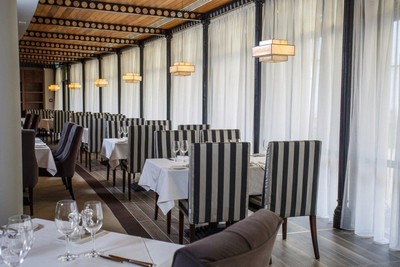
A column in the centre of a room divides without separating. It creates two zones that remain visually connected. In an elongated salon, a row of three columns can generate a rhythm that structures the room whilst holding it together. Distance matters: set too closely, columns act as a barrier; too far apart, they lose their structuring force. A distance of two to three metres permits views and movement. Those working with Sculptures can use pedestals as presentation surfaces, thus creating a connection between architecture and art.
Light and Shadow as Amplifiers
A column unfolds its full effect only through light. An uplight emphasises the vertical and makes fluting emerge plastically. Indirect light from the side models the surface and reveals the material’s structure. In a room with tall windows, daylight travels across the column and changes its appearance throughout the day. Polished surfaces create reflections that energise the room. Matte material absorbs light and appears calmer, more stable.
Combinations with Furniture and Accessories
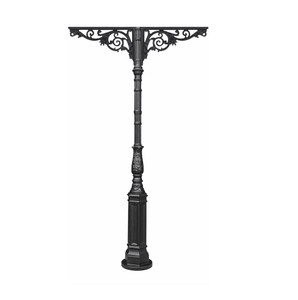
Columns and pedestals do not function in isolation. They require a counterpart: a low table emphasising the horizontal, or a sideboard marking the floor line. A pedestal beside an armchair creates a surface whilst providing a vertical counterpoint. In a dining room, a column behind a buffet can stand and extend the composition upward. Casa Padrino carries matching Decorations that corresponds with such elements and supports the spatial concept.
Historical References in Contemporary Rooms
Classical column forms such as Ionic or Corinthian capitals bring history into modern floor plans. They function as quotation, opening a dialogue between epochs. In a penthouse with concrete ceiling, an antiquated marble column can generate tension without appearing kitschy, provided material and execution are of high quality. Dosage is decisive: a single column as statement works, an entire colonnade in a living space overloads. Those employing historical elements should combine them with contemporary furniture to avoid musealisation.
What Carries the Room
Columns and pedestals are not decoration in the narrow sense. They structure, organise and create hierarchies. A room with considered vertical elements has clarity without appearing rigid. Material choice follows spatial mood, placement follows function. Those employing these elements purposefully work with the means of architecture and create rooms that can be read.
Related categories: Consoles, Armchairs, Sideboards. The full range: Baroque Furniture.