
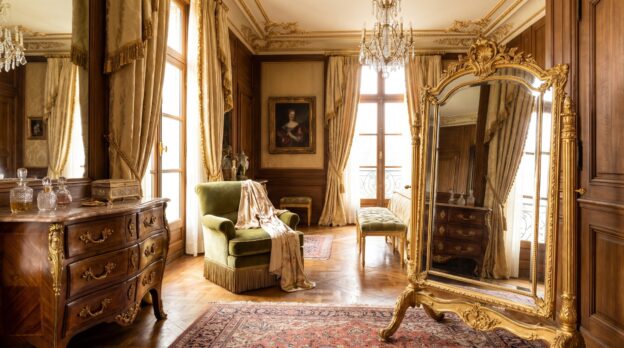
The first light falls through tall windows, grazing oiled wood and polished brass handles. The space between bedroom and bathroom belongs to transition: here the day is prepared, clothing is chosen, the gaze in the mirror adjusted. A dressing room is more than storage space. It is a stage for the morning, a place where order and aesthetics interlock.
Those who design this space need three elements that support each other: the mirror as anchor point, the chest of drawers as functional sculpture, the armchair as point of calm. Their combination determines whether the space is merely practical or whether it creates an atmosphere in which one likes to linger.
The Mirror as Spatial Axis
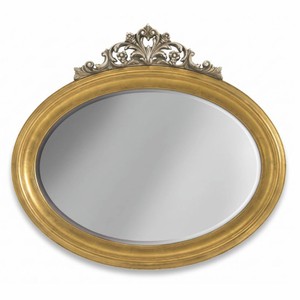
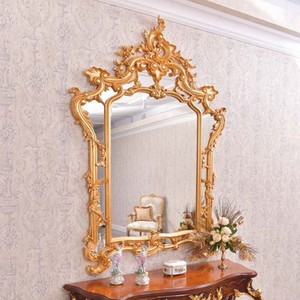
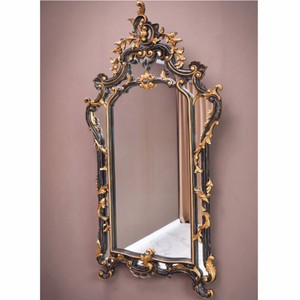
A large standing mirror or a wall-filling model with a frame of dark mahogany or matte brass defines the centre of the room. It doubles the light, opens up narrow floor plans and gives the morning routine a fixed reference point. The proportion is decisive: the frame should be no narrower than eight centimetres so that it has weight but does not appear obtrusive. At Casa Padrino you will find Mirrors with faceted glass or curved baroque frames that hold their own in classical interiors without becoming theatrical.
The placement follows a simple rule: the mirror stands opposite the window or offset to the side, so that daylight falls on the clothing, not directly into the face. Those who combine several mirrors work with different heights. A narrow full-length mirror next to a lower model on the chest of drawers creates depth without overloading the space.
From the Casa Padrino collection
Chests of Drawers as Built Order
The chest of drawers in the dressing room is not a storage place for odds and ends. It is a piece of furniture with presence that accommodates jewellery, watches and accessories while itself appearing like an exhibit. Materials such as solid walnut, lacquered oak or surfaces with inlays bring calm to the space. The height is ideally between 85 and 95 centimetres, so that the work surface is comfortably accessible without having to bend down.
Those who opt for classical forms choose Commodes with three to five drawers, whose fronts are structured by discreet fittings of bronze or blackened iron. The depth is important: 45 to 50 centimetres are sufficient to create order without the furniture protruding into the room. A flat bowl of marble or a tray of leather on the surface gathers small items and prevents the surface from becoming a dumping zone.
The Armchair as Silent Companion
An armchair in the dressing room is not a luxury but a functional detail. It serves as storage for the next day’s clothing, as seating when putting on shoes, as a resting point when the morning becomes hectic. The form should be clear: a high backrest, armrests that are not too wide, a seat that is firmly upholstered but does not yield like a lounge chair.
Materials such as velvet in muted grey, taupe or dark green bring texture to the space without dominating in colour. Leather in cognac or black suits chests of drawers in dark wood and creates a connection between classical furniture language and contemporary reduction. At Casa Padrino there are Armchairs with curved legs in baroque style or simple models with brass feet that fit into various spatial concepts.
Light and Surfaces in Interplay
A dressing room needs several light sources. Ceiling lights alone are not sufficient, they cast shadows on face and clothing. Better are wall lights to the left and right of the mirror that distribute the light evenly. A table lamp on the chest of drawers sets accents and creates atmosphere when the room is used in the evening. The colour temperature should be between 2700 and 3000 Kelvin, warm enough for comfort, neutral enough to reproduce colours realistically.
Surfaces in the room follow a clear hierarchy: wood dominates, metal accentuates, textiles soften. A carpet of wool or sisal dampens steps and visually connects the furniture. Those who forgo high pile keep the space clear and facilitate moving heavy drawers or shifting the armchair.
Proportions and Distances
The arrangement of furniture follows simple rules that open the space rather than obstructing it:
- Between chest of drawers and mirror at least 120 centimetres distance, so that one can move freely.
- The armchair stands to the side, not centrally in front of the mirror, to keep the sight line clear.
- Wall shelves or open clothing rails at a height of 180 to 200 centimetres use the vertical space without visually pressing down.
- In colour, a maximum of three tones dominate: wood, an accent material such as brass or marble, a textile colour.
Those who maintain these distances create room to breathe. The dressing room does not become a cubicle but a place that suggests spaciousness, even when the square metreage is limited.
Details That Make the Difference
Small additions lift the dressing room beyond pure function. A narrow console table behind the armchair accommodates a vase with fresh branches or a bowl for cufflinks. A framed print on the wall, not a poster but an etching or a black and white photograph, gives the room depth. Clothes hangers of wood or metal, chosen uniformly, create order in the wardrobe and appear as a quiet design element.
The insides of the drawers also deserve attention. Lined with felt or velvet, they protect delicate fabrics and convey a sense of care when opened. Casa Padrino offers furniture that does not understand such details as additions but as a natural part of thoughtful design.
A Room That Begins the Day
The dressing room lives from the balance between function and aesthetics. Mirrors, chests of drawers and armchairs are not interchangeable props but supporting elements that structure the space and give it character. Those who rely on clear proportions, high-quality materials and thoughtful lighting create a place that does not accelerate the morning but gives it space. A room in which order is not compulsion but relief.
Related categories: Baroque and Art Nouveau Garden Furniture, Consoles, Columns and Pedestals. The full range: Baroque Furniture.