
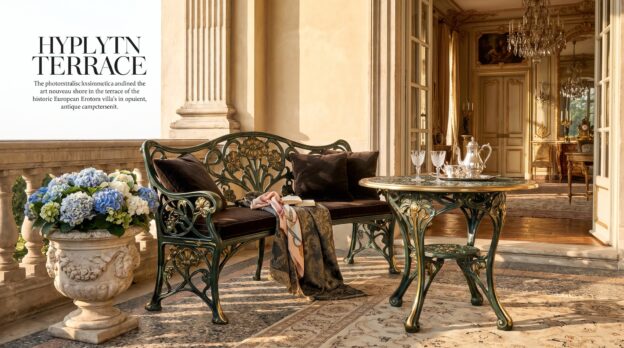
The shadow of an old chestnut tree falls on a bench made of dark green cast iron. The backrest shows tendrils winding around stylized blossoms, each line following the organic curve that Art Nouveau elevated to an art form. Next to the bench stands a tall planter, its relief showing thistles and poppy capsules, patinated by weather, firmly anchored in gravel. Such gardens tell of a time when iron was not merely functional, but became ornament.
Those who design an Art Nouveau garden today seek not the playful, but the formed: furniture and objects that work through their lines, through material that ages without decaying, and through an attitude that does not imitate nature, but interprets it. It is a style that demands calm, clear spaces where each piece receives its own room. Not a hodgepodge, but a deliberate placement.
Cast Iron as the Defining Material
Art Nouveau in the garden lives through cast iron. The material lasts decades, bears weight, shows structure. Benches, chairs, tables: they all receive through casting that depth of detail that wood or aluminum cannot achieve. The surface may be rough, may develop rust, as long as the primer holds. What matters is the form. Baroque and Art Nouveau Garden Furniture made of cast iron brings this quality: they stand heavy, do not shift in the wind, and their ornamentation remains legible, even when moss grows in the recesses.
The coloring follows a clear rule. Dark green, anthracite, matte black: these are the tones that do not compete in the garden’s greenery, but recede. Those who want to set accents choose a light stone gray or a muted ochre, but only for individual pieces. Glossy lacquers have no place here. The patina belongs to the concept.
From the Casa Padrino collection
Tendril Motifs and Organic Lines
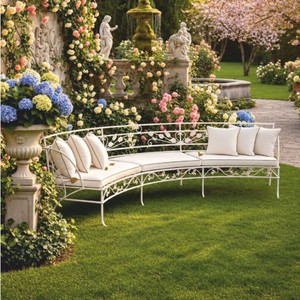
The ornament in Art Nouveau follows the plant, not geometry. Tendrils wind, leaves bend, stems swing. These motifs appear in backrests, table legs, fence panels. They are never symmetrical in the classical sense, but always balanced. The line guides the eye without rushing it. A good Art Nouveau piece shows this movement in stillness: you see the tendril, but it does not impose itself.
Proportion is important. Too much ornament makes the piece appear restless, too little makes it arbitrary. The balance lies in reduction: a central motif in the backrest, a restrained relief on the sides, smooth surfaces in between. This creates furniture that does not tire even after years.
Composing Seating Areas
An Art Nouveau garden requires clear seating areas. Not furniture groups that can be moved arbitrarily, but places that are set. A bench under a tree, a pair of chairs at a small table in front of a hedge, a seating group on a paved surface. The ground plays along: gravel, light natural stone, dark brick. Wooden decks do not fit, concrete only if it is old and weathered.
The orientation follows the light. Morning sun for the breakfast table, shade in the afternoon for the reading bench. Garden Furniture in Art Nouveau style is heavy enough to remain in place, and that is intentional. They mark the location, they create structure. Those who move them change the garden.
Planters as Architectural Elements
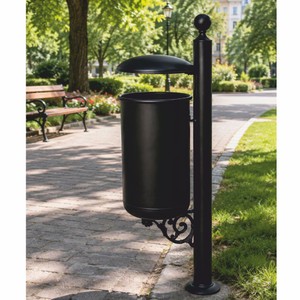
Tall planters made of cast iron or cast stone set vertical accents. They stand at entrances, flank paths, mark transitions between garden rooms. Their form is often cylindrical or slightly conical, the relief shows foliage, fruits, sometimes stylized faces. The planting remains restrained: boxwood, hydrangeas, tall grasses. No colorful summer bloomers, no overhanging cascades.
The size must be right. A planter that is too small appears lost. One too large dominates. The rule of thumb: the height of the planter should be about one third of the height of the plant when fully grown. Flower Pots with Art Nouveau ornaments often bring this proportion already, their design accounts for the plant as part of the composition.
Combination Rules for the Art Nouveau Garden
Not everything that looks old fits together. Art Nouveau does not tolerate baroque flourishes, rustic wooden benches, or modern lounge furniture. The mixture only works within a clear line. A few rules help with selection:
- Combine cast iron with natural stone, not with wood or plastic.
- Green tones and anthracite as base colors, accents only sparingly set.
- Complement organic ornaments with clear, calm plantings, no wild perennial beds.
- Choose few but striking pieces, do not fill the garden.
- Allow patina, but keep construction intact.
Lighting and Details
Light in the Art Nouveau garden comes from lanterns, wall lights, ground spotlights. The fixtures themselves often bear the same tendril motif as the furniture, are made of cast iron or patinated brass. The light is warm, never harsh, often indirect. It highlights the ornaments, casts shadows on paths and walls. LED technology is permitted, as long as it remains invisible.
Small details complete the picture: a cast iron umbrella stand next to the bench, a bird bath with relief decoration, a wrought iron climbing trellis on the wall. These objects need not all come from the same period, but they should follow the same formal language. Casa Padrino offers such pieces that integrate seamlessly because they respect historical proportions without being copies.
Care and Durability
Cast iron in the garden requires little care, but the right kind. Once a year check the surface, treat rust spots with a wire brush, prime, repaint. The material itself lasts forever, only the coating needs renewal. It is important that the furniture stands dry, that water can drain, that no moisture remains under the paint.
The investment in such pieces is long term. They outlast trends, adapt, because they are not fashionable, but formal. An Art Nouveau garden can grow over decades, can be supplemented without the old losing its validity. This distinguishes it from gardens that must be rethought every few years.
What Sustains the Art Nouveau Garden
In the end, it is the clarity that defines this garden style. Few materials, a consistent formal language, an attitude that seeks the enduring. Cast iron, stone, green: nothing more is needed. The furniture stands where it should stand, the plants grow in planters that frame them, the light falls on ornaments that need not be loud. Casa Padrino understands this logic, offers pieces that in such gardens are not decoration, but architecture. Those who have once sat under an old chestnut tree on a cast iron bench understand why this style does not fade.
Related categories: Sofas, Mirrors, Garden Fountains. The full range: Baroque Furniture.