
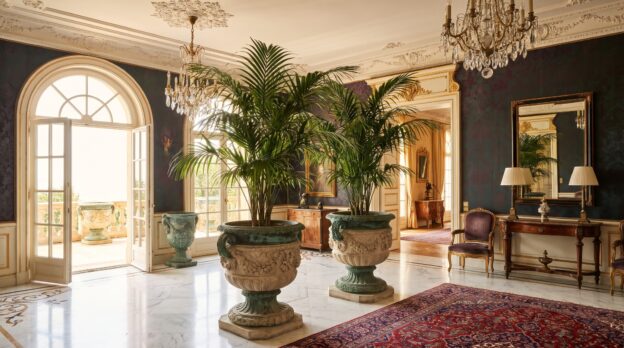
In spacious entrance halls and on expansive terraces, more is needed than a potted plant on the windowsill. Here, presence counts. A planter one and a half metres tall can structure a room, mark a sightline or enliven a bare floor. It does not stand just anywhere, it takes position. Those who work with such vessels think not in decoration, but in architecture.
This applies to the hall of a townhouse as much as to the terrace of a villa. Large planters structure space, create transitions between inside and outside, set vertical accents in horizontal surfaces. They carry boxwood spheres, olive trees or bamboo and thus become pieces of furniture themselves, shaping the character of a place. Those who use them correctly give a room definition.
Material and proportion determine the effect
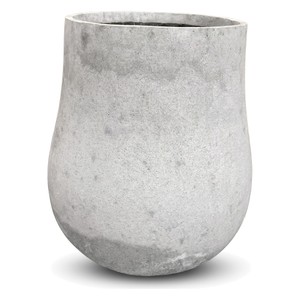
A planter for the hall or terrace must assert itself in scale. Terracotta in warm red-brown suits natural stone and wood, appears Mediterranean and grounded. Zinc sheet brings industrial sobriety, is suitable for modern buildings with clear lines. Stoneware in grey or anthracite fits into purist concepts, while glazed ceramic in dark green or black creates elegance and depth. The surface decides whether the vessel recedes or itself becomes an eye-catcher. A matt tone lets the plant dominate, a glossy coating makes the vessel an object.
The proportion follows a simple rule: the vessel should make up about one third of the total height when the plant is fully grown. A pot that is too small makes the tree appear wobbly, one that is too large overwhelms the plant. With Flower Pots in oversized formats, this also applies: the diameter should suit the room width. In a narrow hall, wide planters appear squat, on a large terrace slender forms are lost.
From the Casa Padrino collection
Placement as spatial positioning
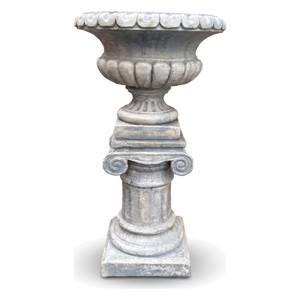
Large planters function like partition walls. They can flank a passage, screen off a seating group or activate an empty corner. In the hall, two identical planters left and right of the stairs mark an axis. On the terrace, a row of vessels separates the dining area from the lounging area without completely blocking the view. Those who work with differences in height place individual planters on Columns and Pedestals to create additional levels and direct the gaze upwards.
The rule here is: symmetry creates order, asymmetric arrangement creates tension. Three vessels of different heights but the same materiality form a group that brings dynamism into the picture. A single, monumental vessel works as a solitary and needs space around it. In any case, the placement must follow the incidence of light. Plants that need sun belong where they receive it. The vessel submits to this requirement.
Colouring and surface texture in interplay
The colour of the vessel must correspond with the floor, the walls and the furniture. Light planters in cream or beige stand out from dark slate, anthracite-coloured vessels disappear on grey concrete, unless that is precisely what one wants. Contrast creates presence, tone on tone creates calm. Those who work with patina, for instance with copper or galvanised metal, bring time into the material. Such surfaces change, acquire stains, discolourations, a history.
Textured surfaces, grooved, hammered or with relief, capture light and shadow. They give the vessel plasticity, make it three-dimensional. Smooth surfaces appear stricter, more reduced, almost graphic. Both have their justification. In a room with many details, such as a hall with stucco and panelled doors, a plain vessel brings calm. In a minimalist setting, the vessel itself may become ornamental.
Plant selection as a design decision
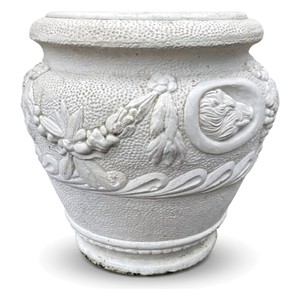
The vessel is the frame, the plant the picture. Topiary, for instance with box or yew, emphasises the architectural effect. Grasses such as miscanthus or pennisetum bring movement, react to wind, change with the seasons. Olive trees or figs create Mediterranean flair, bamboo provides Asian character. It is important that the plant suits the vessel. A baroque terracotta vessel with relief decoration tolerates a formal boxwood, a plain zinc box harmonises with loose grass growth.
Plant height also follows rules. Low, wide plants such as hosta or ferns are suitable for wide, flat bowls. Tall-growing solitaires such as palms or cypresses require deep, stable vessels. Those who combine several plants in one large planter layer by height: tall in the centre, medium at the edge, low or trailing as a finish. This creates fullness without appearing chaotic.
Practical considerations for hall and terrace
In interior spaces, the vessel must be watertight or have a cachepot. Drainage is crucial, waterlogging kills most plants. On the terrace, frost resistance is needed if the vessel is to overwinter. Terracotta without glaze can crack in frost, fibreglass and plastic withstand it. Weight plays a role: a large stone planter with soil and plant weighs several hundred kilograms. Those who wish to move it need castors or plan the position from the outset.
At Casa Padrino, vessels can be found that meet these requirements. They are designed for use in representative spaces, carry heavy plants and withstand the stresses. Those who understand Garden Decoration as part of spatial design find here vessels that are more than containers. They are pedestals, frames, architectural elements.
Combinations with other elements
Large planters rarely stand alone. They function in ensemble with lights, sculptures, seating furniture. A floor lamp beside a tall planter stages the plant in the evening, casts shadows on the wall. A bench opposite creates a point of rest from which to contemplate the greenery. Several vessels of different heights but the same materiality form a group that gives rhythm to the space.
- Terracotta combined with natural stone and wood for Mediterranean ambience
- Zinc and concrete for industrial clarity
- Glazed ceramic with brass or bronze for classical elegance
- Fibreglass in anthracite with stainless steel for contemporary rigour
The rule is: three materials at most, three colours at most. More creates restlessness. Those who limit themselves to few elements give weight to each individual one. The vessel becomes visible, the plant comes into its own, the space gains clarity.
What large planters achieve
A large planter is not an accessory, but a design tool. It structures space, creates height, brings life into built structures. In the hall it receives, on the terrace it frames the view. It connects architecture and nature, inside and outside, statics and growth. Those who use it correctly create places that not only function, but have effect. The vessel carries the plant, and both together carry the space.
Related categories: Side Tables, Beds, Fountains and Water Columns. The full range: Baroque Furniture.